
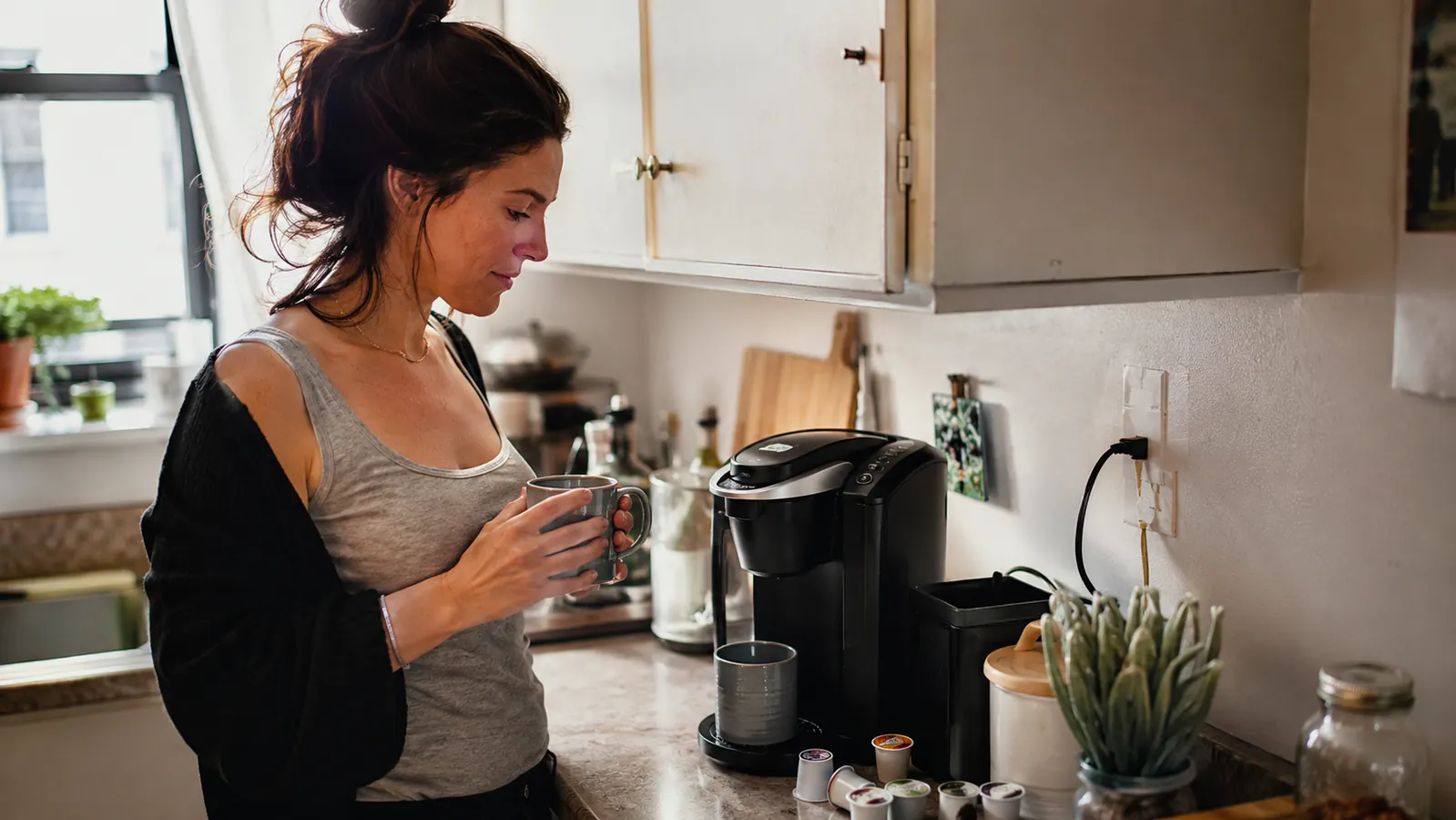
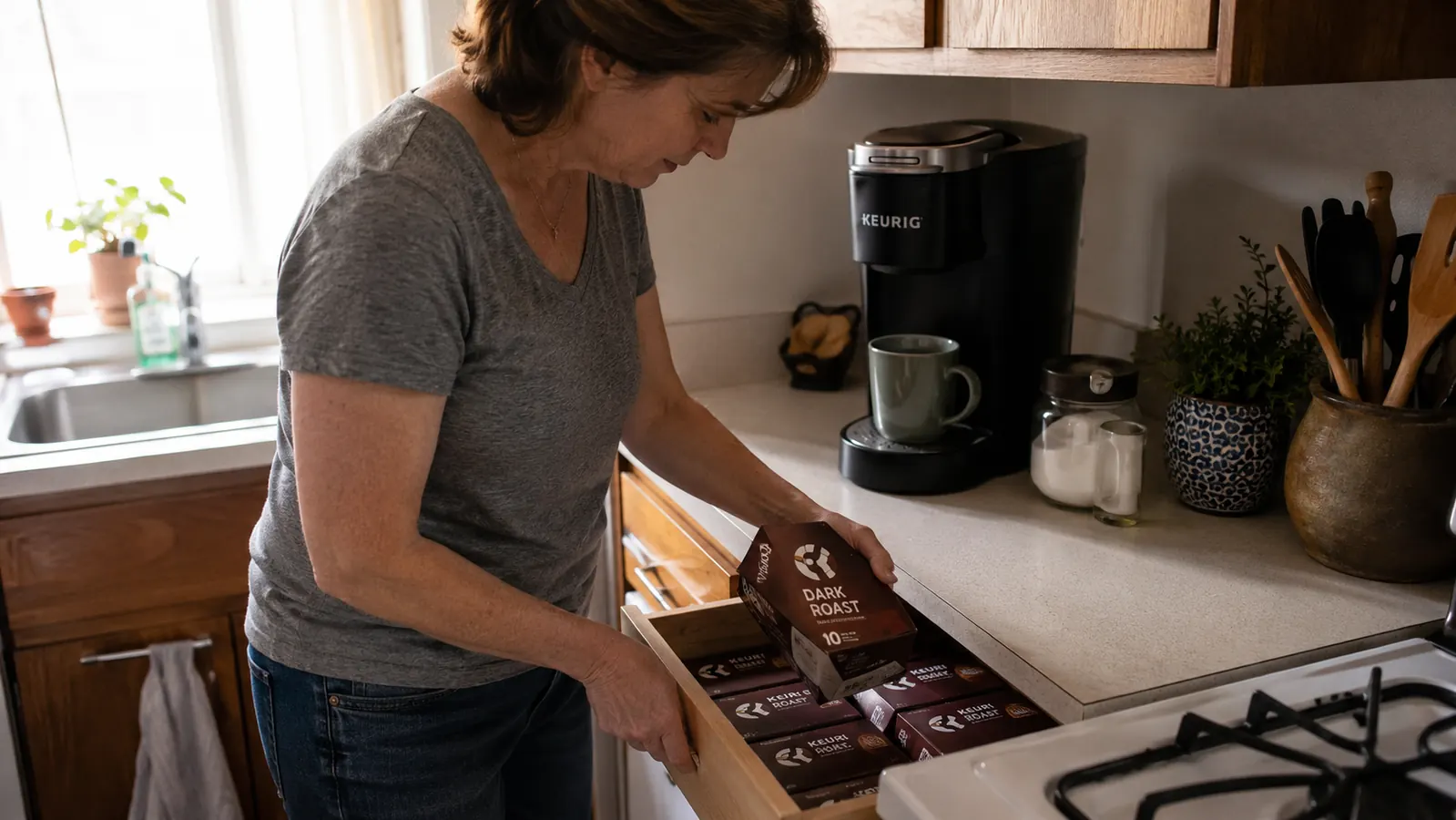
Nobody warned me about the pod drawer problem before I bought the Keurig K-Express, and four months later it's still the first thing I bring up when someone asks about it. My kitchen is one run of counter in an older apartment, narrow enough that I measure everything before I buy it now, so a slim single-serve machine was always going to beat a boxy drip pot on looks alone. But narrow on the counter doesn't mean the footprint disappears. It just moves somewhere else, and for me that turned out to be a cabinet drawer that now holds three boxes of pods instead of the dish towels that used to live there.
This isn't a review that's going to tell you the K-Express was a mistake. I still use it every single morning and I have no plans to go back to a drip pot. But I read a stack of glowing reviews before I bought mine, and most of them read like they were written in the first week, back when a new appliance still feels like a small victory. Four months in, some of that shine wears off, and the parts that wear off are the ones nobody mentions in a first-week writeup. That's what I want to walk through here, plainly, the stuff that only shows up once you've used the thing enough times to notice a pattern instead of just enough times to write a headline about it.
The Quick Verdict
A genuinely narrow single-serve machine that's still worth the counter space, but the pod storage, the brew that gets noticeably weaker on the second back-to-back cup, and a few parts that show wear early are real trade-offs the marketing photos don't show you.
Amazon Check Today's Price →Tired of a coffee maker that looks small in photos and eats a whole drawer in real life?
See today's price, current availability, and real customer photos on Amazon before you commit counter and cabinet space to it.
Amazon Check Today's Price on Amazon →How We Tested
I've run this machine daily since April, weekdays and weekends both, and about two weeks in I started keeping a running tally in a notes app on my phone, mostly out of curiosity about how many pods I was actually burning through in a month. That tally is where a lot of the numbers in this review come from, not a guess made from the side of the box. I also pulled out a kitchen thermometer twice, once in month one and once in month three, to check whether the brew temperature actually holds steady across cups the way I assumed it did, since that's the kind of thing you take for granted until you have a reason to check it for yourself.
My sister stayed with me for four days in June, and having a second person pulling cups off the same machine at the same time in the morning taught me more about its limits than three months of solo use had. Two people wanting coffee within ten minutes of each other is a genuinely different use case than one person brewing a single cup and walking away, and it's where a few of the machine's rough edges showed up that I'd never have noticed drinking alone in a quiet kitchen.
I also switched pod brands three separate times over the four months, partly to see if a cheaper option would hold up and partly because the grocery store near me runs out of my usual brand more often than I'd like. That gave me a wider sample than reviewing off one brand's pods start to finish, which matters more than you'd think for a machine this dependent on a single small input doing all the work of flavor.
What the Pod Habit Actually Costs You
Everyone who reviews a single-serve machine eventually runs the per-cup math against ground coffee, and I did too, but the number that actually changed my monthly budget wasn't the pods themselves. It was the accessories the box doesn't mention you'll need. The machine takes a replacement water filter cartridge if you want to keep using the built-in filter slot, and mine needed its first swap around the two-month mark once the water in my area started tasting slightly off through it. That's a small, recurring cost that never shows up in any of the reviews I read before buying, because it's not part of the headline price and it's easy to forget exists until the water starts tasting like it needs changing.
Descaling solution is the other line item that quietly adds up. I bought a bottle in month one assuming it would last me a year based on how the instructions read, and I was wrong. Between the mineral content in my tap water and how often I run the machine, I'm through most of that bottle already and expect to buy a second one before the six-month mark. None of this is expensive on its own, a few dollars here and there, but stacked against the sticker price of the machine, the real cost of keeping it running well over a year is meaningfully higher than the box price suggests, and nobody puts that math on the packaging where you'd actually see it before you buy.
The pod price itself has crept up too, which I didn't expect to notice but did once I was tracking it. The multipack I bought in April cost less per pod than the one I bought in July, same brand, same size box, just a few cents more each time. A few cents doesn't sound like much until you're buying pods every ten days for four straight months and the total keeps landing a little higher than the month before, which is easy to miss unless you're actually writing the numbers down instead of trusting your memory of what things used to cost.
The Second Cup Is Never as Good as the First
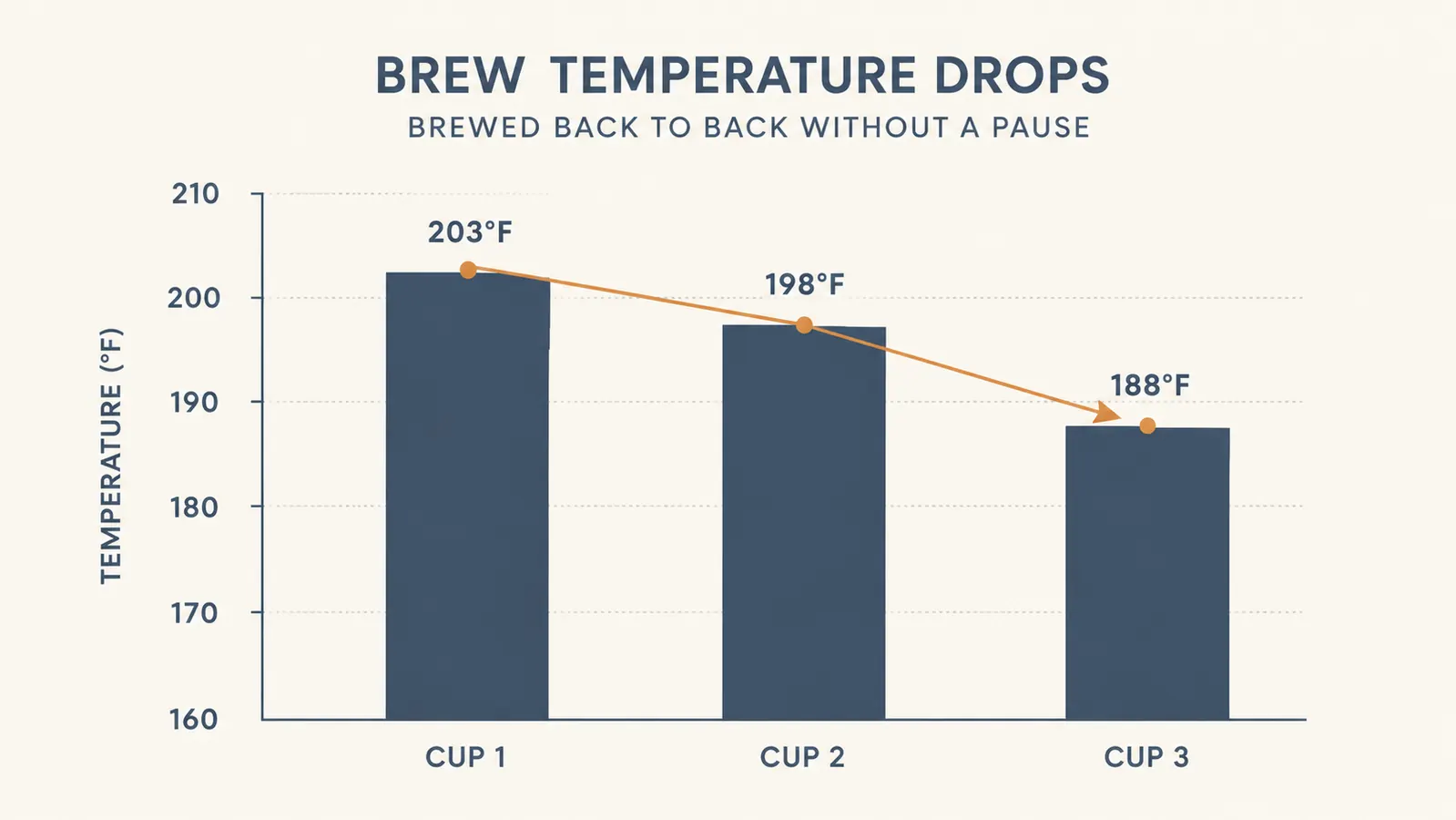
This is the part I wish I'd known before my sister's visit made it impossible to ignore. Brew two cups back to back on the Keurig, meaning within a minute or two of each other with no real gap in between, and the second one comes out noticeably cooler and thinner than the first. I confirmed it with the thermometer rather than trusting my own taste buds, and the drop was real, not imagined. The internal heating element needs a short recovery window between brews to get back up to full temperature, and if you skip that window because someone else in the kitchen wants their coffee now, you're both drinking a slightly worse cup than the one before it.
For someone brewing one cup a day, alone, with time to let the machine sit between uses, this never comes up. You'd never know it was happening. But if there's any chance you're making back-to-back cups, for a partner, a roommate, or a guest, budget an extra minute or two between brews if you want both cups tasting the way the first one always does. The box doesn't mention a recovery window anywhere, and it's the kind of detail you only find by testing it, not by reading the manual that comes tucked under the reservoir.
The Noise and the Smell Nobody Mentions
In a small kitchen, sound carries in a way it just doesn't in a bigger one, and I wasn't ready for how much this machine announces itself every morning. There's a mechanical whirring while it heats and pumps water through the pod, followed by a hiss right as the coffee actually starts pouring, and in an apartment with thin interior walls, that whole sequence is loud enough to hear clearly from the next room with a door shut. It's not alarming, and it's over in under a minute, but if you're brewing coffee before anyone else in the house is awake, know that you're not being as quiet about it as a kettle or a French press would let you be.
The other thing nobody mentioned to me beforehand was the plastic smell during the first handful of brews. It faded completely after about the first week of daily use, and I haven't noticed it since, but if you're sensitive to that new-appliance smell, the first few cups will carry a faint whiff of it along with the coffee. Running two or three empty brew cycles with just water before the first real cup cuts it down noticeably, and I wish the setup instructions had mentioned that instead of me figuring it out on my own halfway through the first box of pods.
The Storage Problem the Photos Don't Show
The K-Express does not come with any built-in pod storage, no carousel, no drawer, no side rack. In the product photos it just sits there on a clean counter next to a mug, which is accurate but incomplete. In real use, pods have to live somewhere, and unless you're buying one box at a time and running out constantly, that somewhere is going to eat into a cabinet or a drawer you were using for something else. Mine took over the drawer that used to hold dish towels. A friend who bought the same machine after seeing mine ended up with pod boxes stacked on top of her refrigerator because she didn't have a spare drawer to give up.
This matters more in a small kitchen than it would anywhere else, because small kitchens don't have a spare drawer sitting empty waiting to be repurposed. Every inch of storage is already assigned to something. Before you buy this machine, think through where the pods themselves are going to live, not just where the machine will sit, because the machine's narrow footprint is only half the space commitment. The other half is wherever you end up stashing a running supply of pods, and that part isn't optional once you're using it daily instead of as an occasional treat.
What Shows Wear First
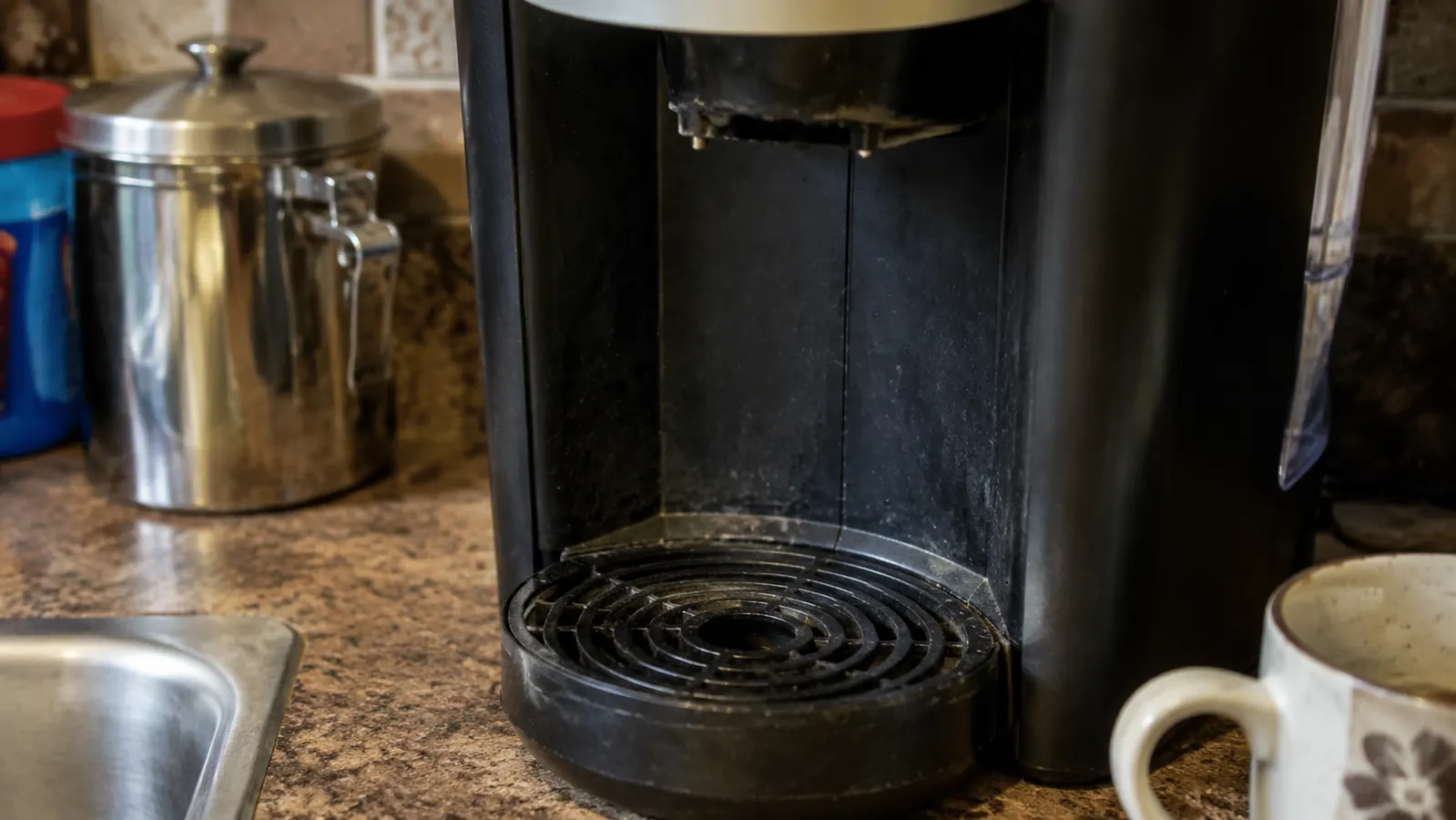
Four months of daily use is enough time to see which parts of an appliance are built to last and which ones aren't, and a few things on the Keurig are already showing their age. The drip tray has a faint ring of mineral staining that doesn't fully scrub off anymore, cosmetic only, but visible if you're the type who notices that kind of thing on a counter appliance you look at every morning. The plastic top lid, the one you lift to load a pod, has developed a slightly looser hinge than it had on day one. It still closes and seals fine, but it doesn't snap shut with the same solid click it used to, and I can feel the difference even if I can't measure it with anything more precise than my own hands.
The needle that pierces the pod clogged once, around month three, and the fix was straightforward, a paperclip and the cleaning instructions in the manual, but it's worth knowing going in that this is a maintenance task you'll likely run into eventually rather than a rare fluke. None of these are dealbreakers on their own. They're the normal wear pattern of a machine doing the same mechanical motion multiple times a day, every day, for months. But if you're the kind of buyer who expects a counter appliance to look and perform exactly like day one a year in, know that some cosmetic and mechanical wear is part of the deal here, not a sign that something went wrong with your particular unit.
What I Liked
- Narrow enough to genuinely earn a spot on a tight counter
- Consistent, decent coffee on the first cup of the day, every time
- Simple button controls with no app, screen, or setup hassle
- Handles daily use well with only minor cosmetic wear after four months
- Reasonably quick recovery between brews if you space them out a bit
Where It Falls Short
- No built-in pod storage, so the real footprint includes a drawer or cabinet you didn't plan on losing
- Second cup brewed back to back comes out measurably cooler and weaker
- Replacement water filters and descaling solution are real recurring costs the box price doesn't include
- Pod prices crept up noticeably over four months of the same brand and size
- Drip tray staining and a looser lid hinge show up earlier than I expected
- Louder brew cycle than I expected in an apartment with thin walls
The narrow footprint on the counter is real. It just relocates itself into a drawer you didn't plan on losing.
Who This Is For
This machine still makes sense if you're brewing one cup at a time, mostly alone, and you've got a spare drawer or a low shelf you're genuinely willing to hand over to pod storage. It's also a fair pick if you'd rather deal with small, predictable recurring costs, a filter here, a bottle of descaling solution there, than plan your morning around a full pot of coffee going stale before you finish it. If you go in expecting a few honest maintenance tasks along the way instead of a machine that just works forever with zero upkeep, four months in, it's held up fine for what it actually is, no better and no worse.
Who Should Skip It
Skip this one if you regularly need two cups within a few minutes of each other, for a partner, roommate, or morning guests, because the temperature and strength drop on that second cup is real and it will show up more often than you'd like. Skip it too if your kitchen genuinely has no spare storage to give up, since the pods have to live somewhere and that space isn't optional once you're buying in bulk to keep the per-pod cost down. And if you've read this whole review hoping for a machine with zero ongoing upkeep and total silence every morning, this isn't that. The filters, the descaling solution, and the brew noise are all small things individually, but they're real ones, and pretending otherwise going in just sets you up to be mildly annoyed by month three instead of prepared for it.
Still think the honest version sounds like a fit for your counter?
Check today's price, current stock, and recent buyer photos on Amazon before you decide.
Amazon Check Today's Price on Amazon →