
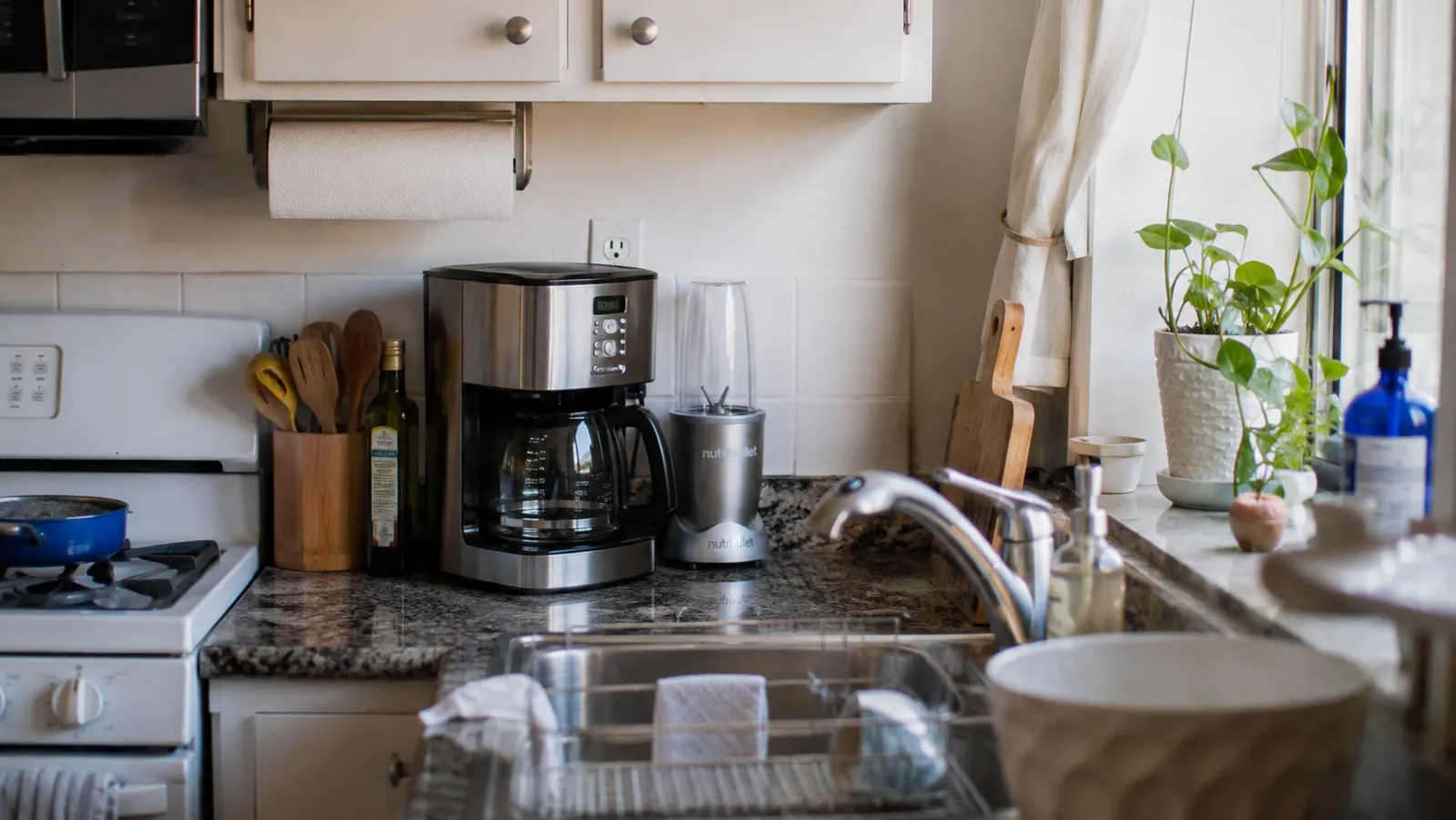
My counter is one long stretch of laminate between the sink and the stove, about thirty inches, and for years a chunk of it was permanently claimed by a blender I used maybe twice a month. It had a thirty six ounce pitcher and a base the size of a toaster, and it earned that spot by making smoothies about as often as I flossed. Six months ago I swapped it for the Magic Bullet Blender, the 11 piece silver set, mostly because I was tired of moving a full size pitcher blender off the counter every time I needed room to chop an onion next to it.
The short version: it's still on my counter, and it actually gets used most mornings instead of sitting there as decoration. That's the bar I hold every appliance to in a kitchen this size, does it get picked up and used, or does it get put away and forgotten. Six months of smoothies, a couple of salad dressings, and one memorable attempt at hummus later, here's what actually happened.
The Quick Verdict
A genuinely compact personal blender that clears my upper cabinet and earns daily use, with a motor that struggles on anything frozen or fibrous and cups that scratch faster than I expected.
Amazon Check Today's Price →Wondering if a blender this small can actually keep up with daily smoothies?
Check today's price and current availability on Amazon before you clear counter space for it.
Amazon Check Today's Price on Amazon →How I've Used It
I run the Magic Bullet five or six mornings a week, almost always for the same thing: a smoothie before I leave for work, spinach or frozen berries, a scoop of protein powder, water or oat milk depending on what's in the fridge that day. I've also used it for salad dressings twice a month and, once, a small batch of hummus that pushed it further than I think it was ever built for.
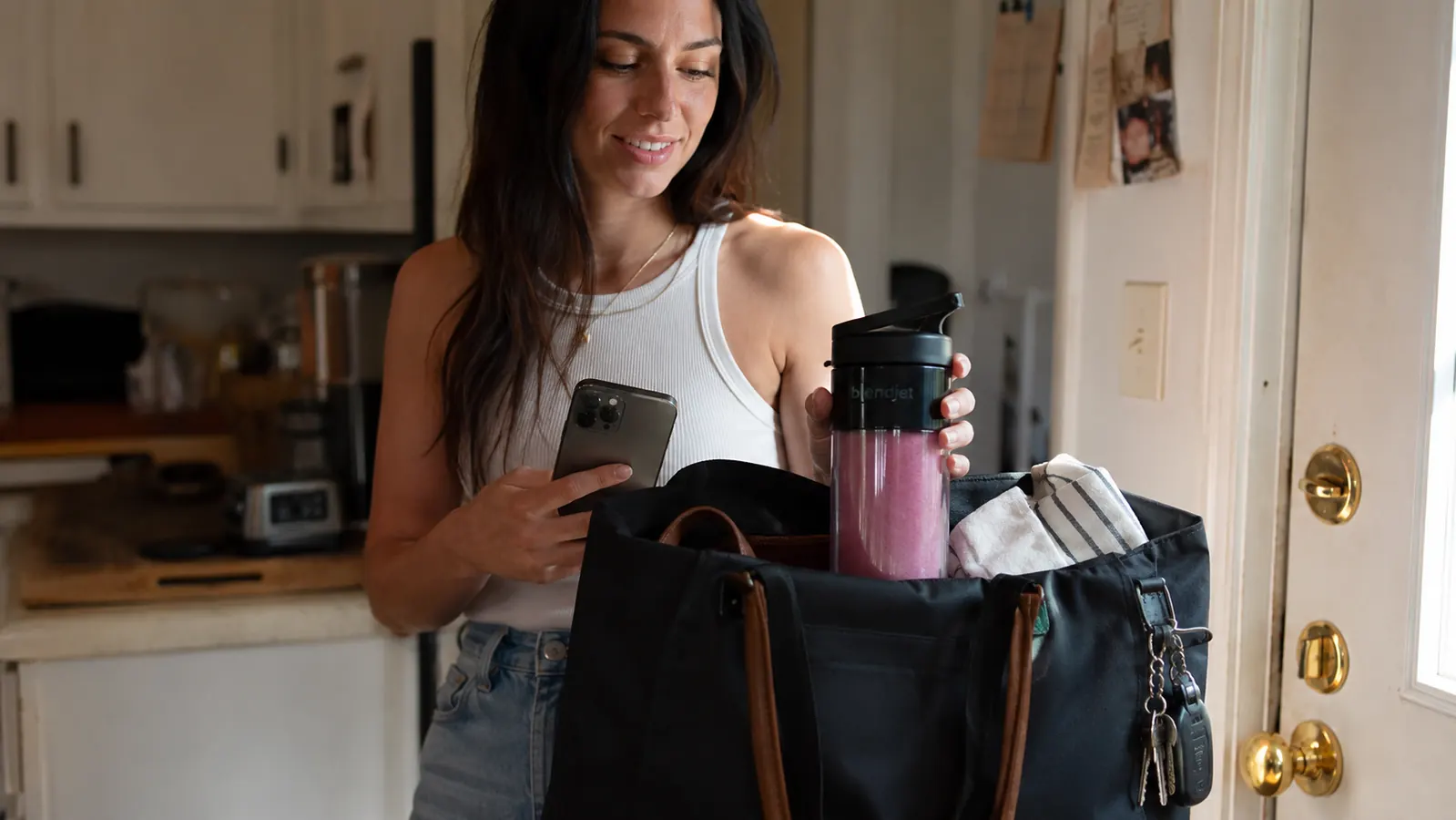
I'm cooking and blending for one most days, my partner joins in on weekends, which means I'm almost always using the tall cup rather than the shorter one that comes in the set. That distinction mattered more than I expected going in. The party mug lid barely gets touched, while the tall cup and its flip top to go lid are what actually leave the house with me most weekday mornings.
The set comes with eleven pieces total: two blades, a tall cup, a short cup, a party mug, a stay fresh resealable lid, a flip top to go lid, a lip ring, a comfort lip ring, plus a recipe booklet I read once and never opened again. In six months I've used four of those eleven pieces regularly. The rest live in the cabinet next to the base.
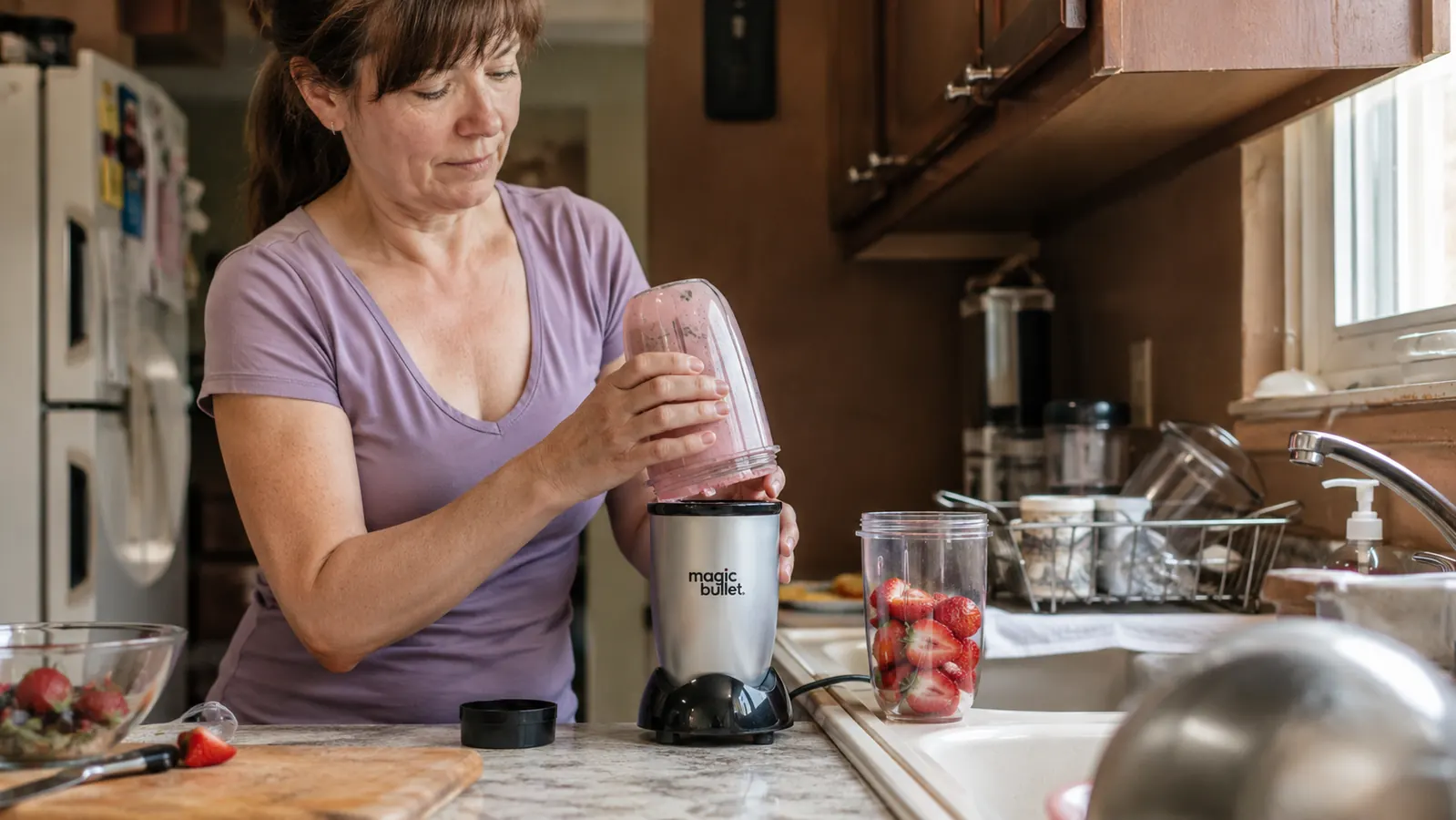
My actual weekday routine is fifteen minutes end to end, from opening the fridge to rinsing the cup and heading out the door. That includes loading the cup, one long pulse, twisting on the to go lid, and washing the blade while the coffee finishes brewing. A full size pitcher blender never fit into that window for me, mostly because it needed its own separate wash before I could even start, and I was rarely willing to do dishes at seven in the morning just to make a smoothie.
The Footprint, On My Actual Counter
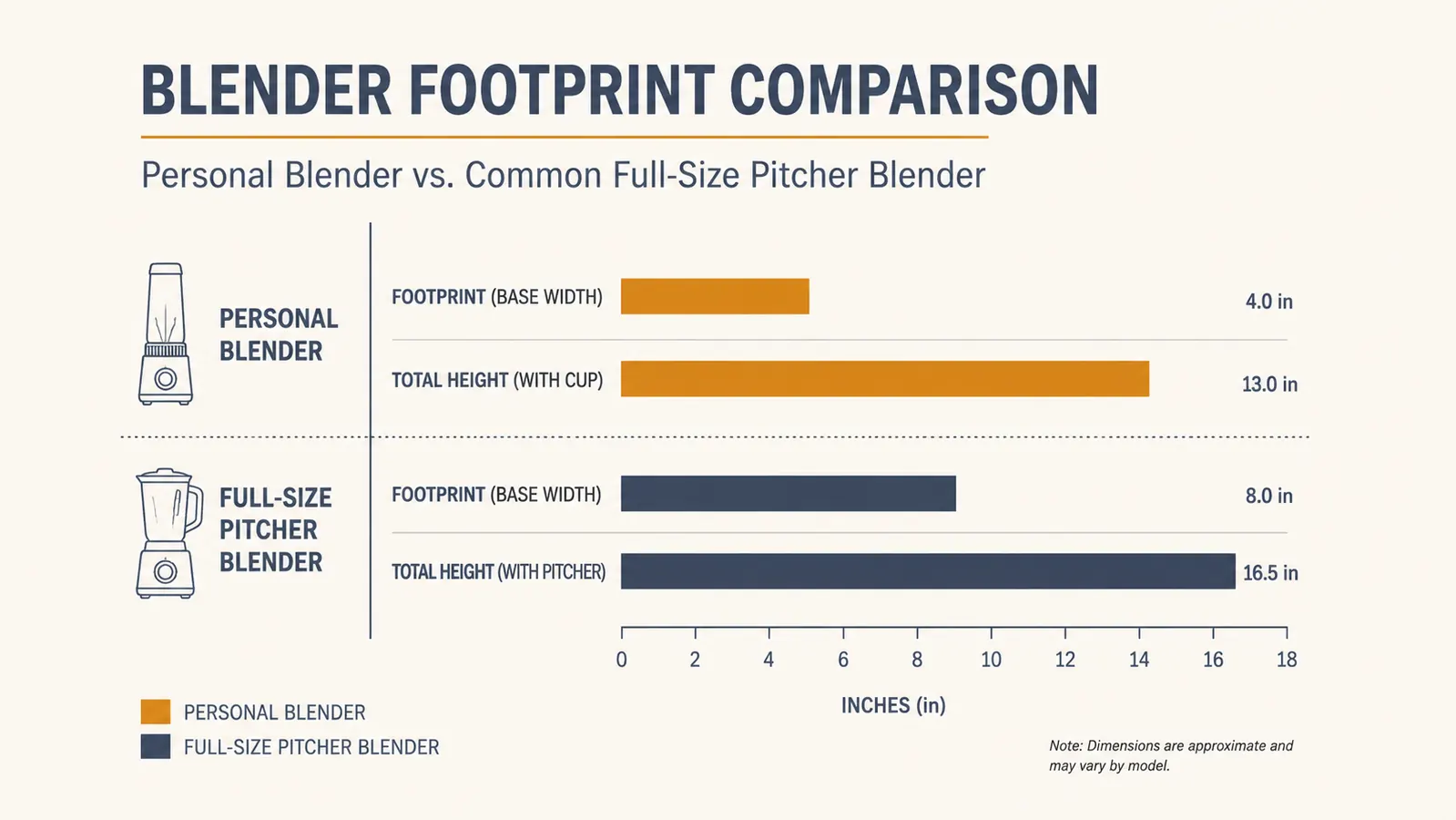
This is the part that actually decided the purchase for me. The Magic Bullet's base is about 5.5 inches across and just under 5 inches tall on its own, small enough that it tucks behind my coffee maker without either of them fighting for the same six inches of counter. With the tall cup locked on and blending, the whole unit is close to 13 inches from counter to lid, which clears my upper cabinets with about three inches to spare. I checked that measurement with a tape before I bought it, because the blender I replaced didn't clear my cabinets and lived a life of being lifted down and set back up every single time.
That's the whole appeal of a personal blender over a full pitcher blender in a kitchen like mine. My old one had a base nearly 8 inches across and a pitcher that added another 14 inches of height when it was locked on, and the whole thing needed almost a foot and a half of clearance to use without hitting the cabinet above it. This one doesn't. I leave it plugged in and sitting out permanently, which is the actual test for whether an appliance earns its spot here.
Storage, on the mornings I do put it away, is easy in a way the old blender never was. The base and one cup nest together in about the same footprint as a large coffee mug. I keep the extra cups and lids in a drawer instead of on the counter, so the only thing that lives out in the open is the base and whichever cup I used that morning, rinsed and drying next to the sink.
I measured the underside of my upper cabinet too, since that's the number that actually matters if you're planning to leave this out. My cabinet bottom sits 16 inches above the counter. With three inches of clearance to spare above the blended cup, that leaves me room to swap in a wider cup or the party mug without worrying I'll clip the cabinet mid pour. If your cabinets sit lower than 15 inches, I'd measure before you buy, because that clearance is the whole reason this one stays out and the old one didn't.
Blending Results, Six Months In
For what it's actually built for, smoothies with soft or thawed fruit, it does the job well. Frozen berries blend smooth in under 30 seconds if I let them sit out for ten minutes first. Spinach disappears completely, no flecks left in the cup, which was not true of the cheaper personal blender I owned before this one. Protein powder mixes in without clumping as long as I add the liquid first.
A banana, a spoonful of peanut butter, and a splash of milk is my most repeated combination, and it's the one recipe that has never once given the motor any trouble in six months. Bananas add enough moisture on their own that the blades never bog down, which is probably why it's become my default whenever I'm running late and don't want to think about the recipe at all.
Where it struggles is anything genuinely frozen or fibrous straight from the freezer. A cup of frozen mango cubes with no added liquid stalls the motor within the first ten seconds, and I've learned to either add more liquid than a recipe calls for or let things thaw slightly before I start. Ice is a similar story. It'll crush a handful, but a full cup of ice cubes alone makes a grinding sound I don't love and takes closer to a minute of stopping and restarting than the smooth twenty second blend the packaging implies.
The hummus experiment was a mistake I don't regret trying. Chickpeas, tahini, and lemon juice in the short cup nearly stalled the motor twice, and I ended up finishing it by hand with a fork because the blades couldn't get through the thicker paste without more liquid than the recipe wanted. If your daily use is mostly smoothies and thin sauces, none of this matters. If you're hoping to replace a food processor, it can't.
Cleanup and the Cups
Cleanup is genuinely fast, which is most of why I still use this every morning instead of skipping the smoothie on a rushed day. Rinse the blade under hot water, a quick scrub with a bottle brush if there's pulp caught in the threads, rinse the cup, done, usually under a minute. The blade attachment isn't dishwasher safe by the manual's own instructions, so I hand wash it every time rather than risk the seal, but the cups themselves go in the top rack without issue.
Odor was a concern I didn't expect to have but did. After a spinach and berry combo sits in the cup even briefly before I get to washing it, there's a faint smell that lingers around the rubber gasket if I don't get to it right away. A quick soak in warm soapy water clears it, but it's a step I've had to add to the routine that I didn't need with my old glass pitcher blender, which never held onto smell the same way.
The cups have held up worse than I expected. The tall cup I use daily has a faint cloudy ring near the bottom after six months, the kind of scratching that comes from ice more than anything else. It's cosmetic rather than functional, but it's there. I've also noticed the flip top to go lid feels slightly less snug than it did on day one, not a leak yet, but I check it before I toss it in a bag now instead of trusting it blind.
Noise and the Motor, Six Months Later
It's loud for its size, louder than I expected from something this compact. A short pulse for a smoothie is over quickly enough that it doesn't matter, but the extended runs I needed for the hummus attempt were genuinely too loud to run before my partner was awake without an apology afterward. It's a higher pitched whine than my old pitcher blender's motor, more like a kitchen tool and less like an appliance trying to sound premium.
The motor itself hasn't slowed down that I can tell. Six months of near daily short runs hasn't produced any burning smell or noticeable strain, which is more than I can say for the blender it replaced by month four. The manual is clear about not running it more than a minute at a time, and I've mostly respected that, one long pulse, a pause, another pulse if needed, rather than holding the button down and hoping.
It doesn't walk across the counter the way a couple of cheap handheld blenders I've owned have, which matters in a kitchen where the blender sits eight inches from the sink edge. There's a small suction pad ring on the bottom of the base that grips my laminate well enough that I've never had to chase it during a run, even on the ice heavy blends that make the most noise and vibration.
What I Considered Instead
Before buying this one I looked hard at a Nutribullet in roughly the same size class, mostly because it's the other name everyone mentions when they talk about personal blenders. I ended up going with the Magic Bullet because it had the smaller footprint of the two on my counter, and I'd already tested a friend's set of cups before committing to my own. I've written up a full side by side if you want the comparison on power, cup sizes, and price.
I also considered just keeping my old pitcher blender and living with the counter space it took, mostly out of not wanting to buy something new. What changed my mind was doing the actual measurement. Three extra inches of cabinet clearance and four extra inches of counter depth doesn't sound like much until you're the one moving a blender off the counter every time you need to chop something next to it.
What I Liked
- Genuinely small footprint, base is about 5.5 inches across, clears most upper cabinets with the cup attached
- Blends soft and thawed fruit smooth in under 30 seconds
- Cleanup takes under a minute, most parts are dishwasher safe
- Flip top to go cup travels well for a weekday smoothie routine
- Simple twist on operation, no buttons or settings to learn
Where It Falls Short
- Motor stalls on frozen fruit or a full cup of ice without added liquid
- Loud for its size on extended runs
- Cup shows faint scratching from ice by month six
- Not a substitute for a food processor on thicker mixtures like hummus
- One minute run limit means you can't just hold the button down
Three extra inches of cabinet clearance doesn't sound like much until you're the one moving a blender off the counter every time you need to chop something next to it.
Who This Is For
This is the right blender if you're making smoothies for one or two people most mornings, you have a genuinely tight counter, and you want something you can leave plugged in without it eating your workspace. It's also a good fit if your usual blend is soft or thawed fruit, protein powder, and liquid, nothing that needs real horsepower. If a to go cup that doubles as your travel mug matters to your actual morning, that alone might be worth it.
Who Should Skip It
If your daily blend is straight from the freezer, ice heavy, or leans toward thicker things like hummus or nut butter, this motor will frustrate you more often than not. It's also not the choice if you're blending for three or more people at once, the cups top out around 18 ounces and you'll be running batches back to back. A full size pitcher blender with more wattage will serve you better there, even if it costs you the counter space.
If your counter is as tight as mine, this one is worth a look.
See current pricing, availability, and customer photos on Amazon.
Amazon Check Today's Price on Amazon →